Communal Function
The Negro Church as a Social Epicenter within the Black Imagination
"It is our position that it was not what remained of African culture or African religious experience but the Christian religion that provided the new basis of social cohesion. It follows then that in order to understand the religion of the slaves' one must study the influence of Christianity in creating solidarity among
a people who lacked social cohesion and a structured social life." -The Negro Church in America, Benjamin Frazier
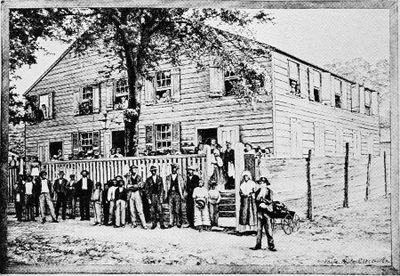
The church served as major social centers for Black communities. Fellowship activities outside of religious services included the formation of youth groups, clubs, dinners, and women's services. Communally, the Negro church was viewed as safe gathering spaces where Black people could organize and avoid social isolation or exclusion. Churches were seen as places of belonging and hope throughout key historical moments like the Jim Crow era and the Civil Rights movement.
Photo Credit: First African Baptist Church in Savannah, Georgia (First Colored Baptist Church)